The Rise of the ‘Authenticity Economy’
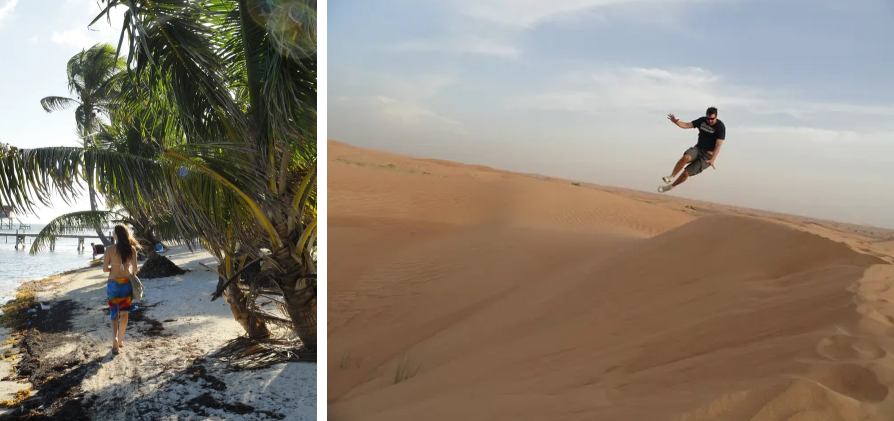
AI will never replace an authentic experience. (Note: I’m the goof on the right)
Every economic revolution, from industrialization to the digital age, brings a new type of economy and employee class. With the age of AI rapidly approaching, we may be seeing the start of what I call the ‘Authenticity Economy’.
Economic progress has always been accompanied by a dramatic upheaval and reshuffling of work, industries, and talent. Some industries, typically the “traditional” ones of their day and age, see a significant reduction or elimination of work and thus workers. At the same time, other industries experience rapid growth, investment, and creation of new worker classes and skills.
The Industrial Revolution saw people move from rural, agrarian life to the cities and factories. Farm work dropped. Factory work rose. Talent markets shifted and adjusted accordingly, going to where the work was, gaining new skills as they sought better economic opportunities.
When manufacturing in the United States saw a wave of outsourcing, the working class again had to find safer conditions for employment. One outcome was the rise of the service economy, where people no longer worked in the factory but in customer service related jobs instead. The conditions changed and the population adjusted.
White collar work, information workers, even social media influencers…the rise in each of these professions was a result of and response to changes in economic opportunities. People are really good at adjusting and adapting to get their basic needs met. Economic change brings a lot of stress and strain, but also a significant wave of opportunity for those that are capable and motivated to make the change.
I’m not saying this is right or wrong, good or bad. It’s just the reality of the adaptability of labor forces to market conditions out of their control.
That brings me to what I believe will be one of the economic results of the AI revolution. The rise and value of an Authenticity Economy.
Press enter or click to view image in full size
Press enter or click to view image in full size
Right now is a confusing, concerning time for the working class, especially those that are in or planning to join the white collar, information worker economy. AI has the potential to destroy entry level jobs, eliminate entire classes of workers, and greatly reduce employment opportunities for an entire generation. There is a lot of stress and angst. Rightly so. But people will figure it out. It won’t be easy, it won’t be smooth, it won’t be linear. But generally speaking, the markets will adjust and talent will find a way to secure employment to provide for themselves and their families.
The question is where they will go. That’s where authenticity comes in.
I’ve noticed more and more there is resistance to AI. The term “AI slop” came into vogue in 2025 and it’s a very appropriate term. A lot of AI outputs right now are not high quality, at least not at a commercial level compared to what can be done in real life or even with CGI. There is real, persistent concern about deep fakes and scams and the risk to the arts and creative spaces. We may not be able to put our finger on why something feels fake, but we can sense it.
As AI gets better, that fear will not only remain, but will probably strengthen. It will become hard to tell what’s real and what’s not. If you assume everything is fake, then you lump it all together and dismiss it. Some quality work, from true creatives, will be lumped together with mindless algorithmic outputs.
As that happens, people will seek out verifiable, authentic things. Experiences. Physical items. In person interaction. Something will drive us to assure ourselves that the thing we’re experiencing is real. And the only way to be sure is to move towards things you can hold or feel or smell or experience. You can’t trust what’s digital. You can trust what your eyes see in front of you in real life.
That’s where Authenticity becomes an industry itself. We already see some of this post-COVID. The rise in travel and experience. People spending more money on remodeling their homes as places of comfort and security and enjoyment. Turning more towards the advice and counsel of people they trust, asking for referrals from people they know.
People don’t want a million choices. They don’t want a limitless internet. They want limited but quality options to choose from. And they want confidence that it’s real. So I believe there will be a rise in a class of workers that provides that. Curating content in a more tailored way. Designing experiences that can’t be faked. You’ll see a rise in theater and music attendance. A continued trend upwards in travel. Experiments on real-world experiences, bringing the next generation of hot yoga and axe throwing and escape rooms. It will be a time of great creativity for people seeking ways to feel alive and human. If everything on the screen can be faked, then you turn to what you can see in real life.
I don’t know how this economy will end up. There will be a lot of misses and assumptions and gambles that don’t pay off. A lot of people that create a “just good enough” experience that inevitably fall short.
But if history is any guide, there will be a market for authentic experiences and genuine connection. And with any market, there will be people that know how to meet the demand and create the opportunity. So I’m excited to see what that becomes. How this Authenticity Economy takes shape. And how we can maintain some of our humanity in a time of AI by returning to what makes us human: experiencing life and connection first hand.
