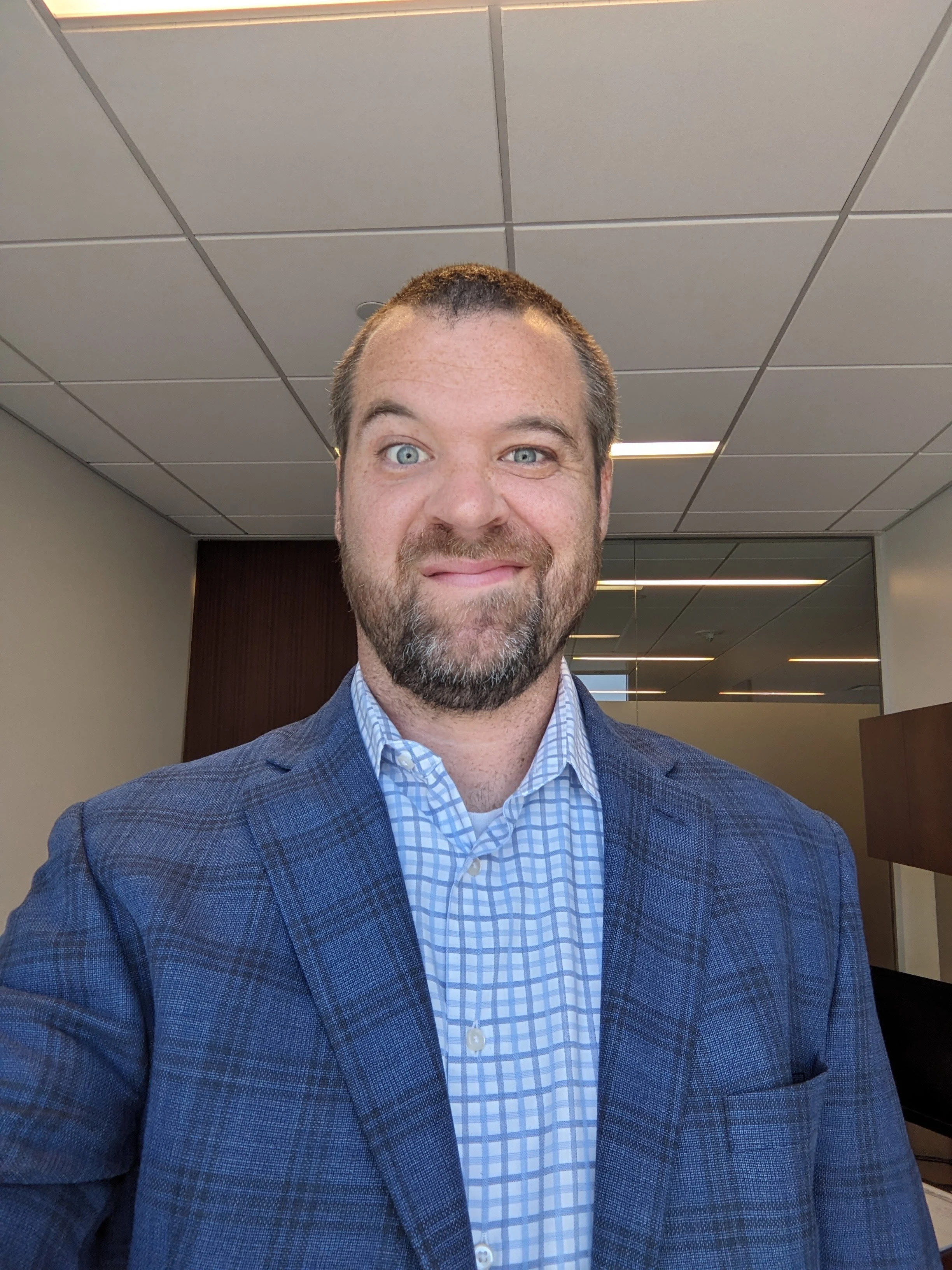
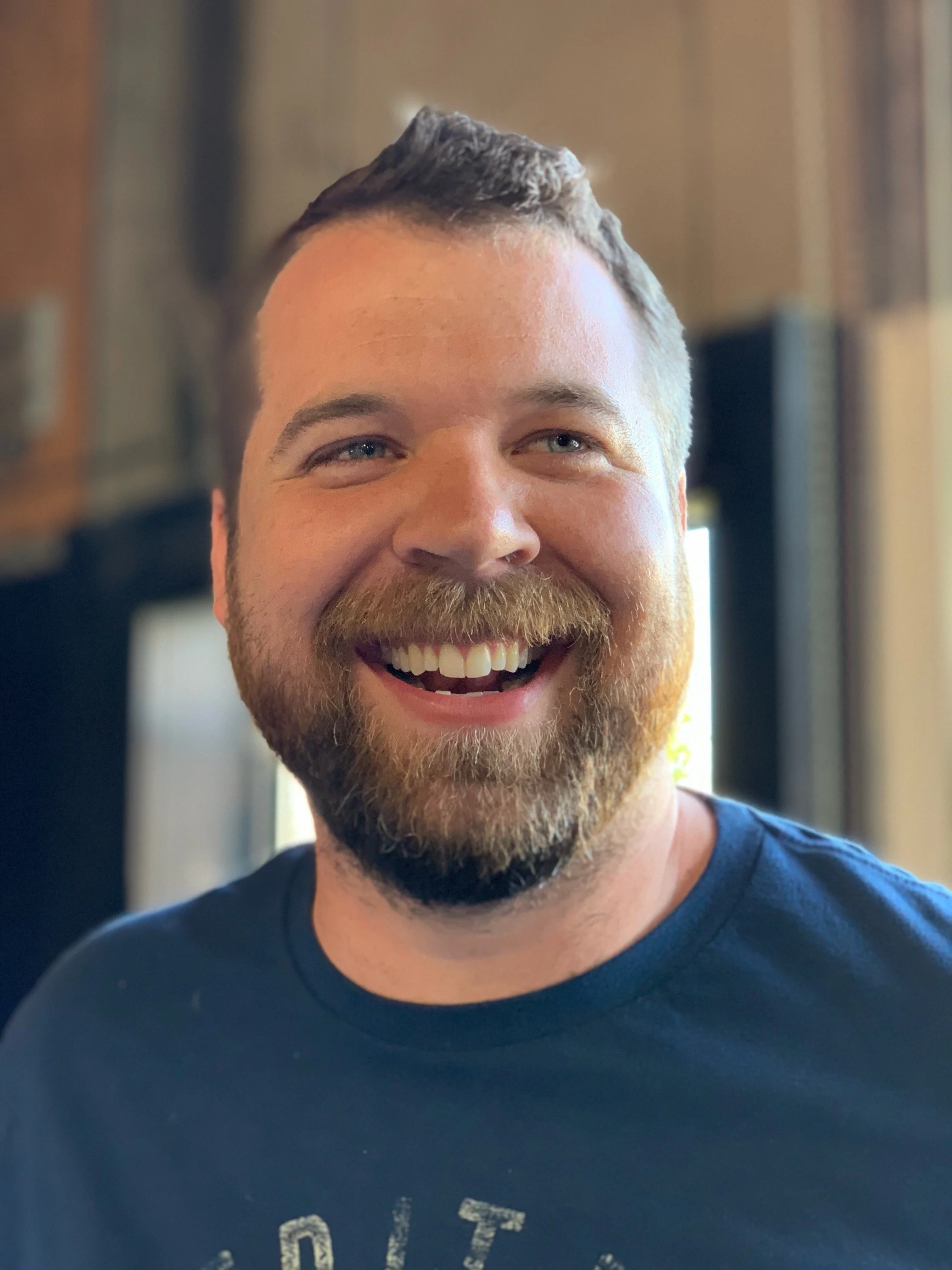
Hi, I’m Sean.
I help leaders figure out how to make AI work for them. I spent 20 years inside Fortune 500 companies building teams, leading through change, and learning what makes organizations actually work. Now I take that experience, combine it with what I've learned building with AI firsthand, and give leaders a framework and a path forward. The technology is new. The challenge isn't. It's still about you and your people.
My Honest Opinions On AI*
*as of March 2026
I start here because I want you to know how I feel about AI. To make our partnership work, I'll always be open about where I'm coming from, and I'll want to understand where you are too. We don’t have to agree. But we have to be clear.
-
Individuals and organizations keep thinking the barrier to AI is a technology problem. Organizations think their people just don't know how to use the tech. Individuals don't think AI is as good as they've been told, so they aren't going to waste their time. Both groups are wrong. They're focused on the technology alone. Is it "good" or "bad"? "Smart" or "dumb"? That's not the problem. The problem is how do you get people to unlock the value of AI for themselves. It's the same way you end up with a great employee. You develop them to become great. It's a people problem. And it's a people solution.
-
I've had to manage over $100 million in payroll reductions in my career. I know what it looks like when companies cut people, especially in a reactionary or short-sighted way. I'm tired of doing that. I believe AI done right makes your team more capable, not completely expendable. That's not me being idealistic or foolish. Budgets get squeezed, headcount drops, all while productivity and margins rise. I get it. You can’t hire as many people and have to let some go. But I have a lot of experience finding ways to develop and deploy people to hit that growth target. It's the same playbook, just with a new tool in the mix.
-
If AI turns out to be transformational and you didn't learn it, you're (way) behind. If AI turns out to be a fad and but you spent the time to learn it, you still built real skills. Leadership. Communication. Creativity. Critical thinking. Those transfer no matter what happens to the technology. There's no scenario where the person who sat it out wins. That's not hype. That's just playing the odds and following each scenario to its logical conclusion.
-
AI is not a new category of organizational challenge. It's the same change management problem companies have always had, with a new technology attached. I've been inside the room for every version of this. The pattern is always the same. Leadership buys the thing (usually because a consultant said so), announces the thing, and expects it to be quickly understood and embraced by those who actually do the work. But then it doesn't happen. Because nobody took into account the actual people who have to learn it, change their behavior, and still do all the work. The C-suite gets the deck from the consultant. Everyone nods. And then the meeting ends and the team says, "Ok, but what do we actually do differently on Monday morning?" That's the gap. That's where I live. Not the strategy deck. I help the team say "Ok, I know where to go from here."
-
I don't use words like "revolutionary" or "10x your productivity." I'm not selling a dream. I'm teaching a skill. If something is impressive, I'll show you through a specific example. And if something doesn't work or I tried something that flopped, I'll tell you that too.
-
If used properly, I believe AI can unlock an exceptional amount of value for organizations of any size. The key is not chasing the newest thing or building a solution without a problem. It’s finding ways to apply it that allows you to do things at a speed and scale never before possible.
-
I will always include this in any engagement and conversation we have. As we just begin to learn about the value AI can deliver, we’re simultaneously discovering the real, significant dangers it presents. That’s why I focus on you and your people. Technology is a piece. Your talent is the key.
My Experience
-
I have spent my entire professional career helping leaders and teams build the skills, tools, and systems they need to succeed. I have always worked in the complicated, messy side of business. The people side.
And as I learn more about AI, I realize that the challenge facing today's leaders isn't understanding or keeping up with the technology. It's figuring out how to use AI as a tool to empower and enhance their team. Because the leaders who figure out the people side first are the ones who actually get value from the technology. The ones who don't are going to get passed by those who do.
-
Prior to starting my own company, I worked at some of the largest, most successful corporations in the world as an HR leader. I had the opportunity to support brilliant leaders and teams across industries, geographies, and functions. And it was in these roles that I learned first hand how many business successes and failures come down to the same things: people, processes, and building strategies and structures that can maximize both. Some businesses had the right people and the wrong resources. Others had it flipped. But the most successful leaders and teams didn’t necessarily have the “most” or “best” of anything. What they had was a clear vision, ambitious objectives, and the ability to understand exactly what their people needed to do a great job. It was an amazing education, full of lessons I carry to this day.
Here are some of the career resume highlights (most recent first):
Gallagher (AJG)
VP, HR - GGB Americas Specialty. A brand new division that brought 4 major business lines together in 9 countries, comprising 6,000 employees. Aligned and optimized the organization while continuing to achieve significant revenue and margin growth across a diverse set of businesses.
VP, HR - RPS. Gallagher’s wholesale insurance brokerage and binding division where we led a major leadership change and brought innovative new programs and processes to staff and clients.
Director, Compensation - GBS. Benefits and HR Consulting division where I managed significant incentive program re-designs and implementations for production and non-production workforces.
Jones Lang LaSalle (JLL)
Executive Director, HR - Global Sales, Product, and Sourcing & Procurement
Sr. Director, HR- Americas S&P and IFM
Director, HR - US Engineering
Manager, HR - Life Sciences Accounts
AbbVie (ABBV)
Manager, HR - Global Specialty Marketing
Shell (SHEL)
Advisor, Account Manager, and Analyst, HR - Shell Leadership Development Program
Education
University of Illinois at Urbana-Champaign
Master Degree - Human Resources and Industrial Relations
Bachelors Degree - Psychology
For more details, check out my LinkedIn page
-
I am grateful for my experience at those companies. I worked with incredibly talented people, learned so much about a wide variety of businesses, and I enjoyed helping individuals and organizations succeed. But in 2025, I was ready for something different.
Part of that need for a change came from being honest with myself about what was quickly becoming the biggest part of my job...finding ways to do more with less. And in my line of work, that meant people. I would estimate that I've overseen at least $100 million(!) in employee reductions (RIFs) over my career. In every business cycle and every industry, it was a fact of life. But as AI began to become more mainstream, I didn't like where things were headed. I knew the cuts would continue, and that my talent and time as a leader would be spent on three primary things:
1.) Protecting as many people as possible by finding creative ways to cut spend,
2.) ending up leading RIFs for large numbers of people anyway during the messy AI integration era, and
3.) constantly fighting for resources to support our growing, successful businesses.
I simply didn't want to do it anymore. So I made the tough choice. I left.
-
What did I want to do? I wanted to do things my way. Wanted to see if I could take 20 years of experience and apply it in new, exciting, and fulfilling ways. So I started a business from scratch. Figured out everything myself. Not just the idea, but the details. How do I get the LLC? Hell, what IS an LLC? How do I buy a domain, build a website, go to market, figure out how I price my services? It was overwhelming and my instinct was to find someone to help mentor and guide me, because I couldn't afford to pay someone with that knowledge to do it for me. Plus, I was eager to learn.
But I realized I had a unique tool at my disposal that entrepreneurs before me never had. I had this new, somewhat confusing, kind of suspicious, but definitely interesting thing in my hands. I had "AI". I had to admit that when it came to starting a business I didn't have expertise myself, and no one around to help me. I had to give in and ask AI. And what I found surprised me. It wasn't magic. But it was genuinely useful, in ways I did and did not expect.
It was like I suddenly had a team of really smart entry-level hires who could research anything, draft anything, and work around the clock. The catch? They needed a lot of development and coaching. They needed my direction and feedback. They needed clear guardrails and objectives. I had to check their work and ask them to explain why they made that mistake. I had to be a manager. I needed to lead.
I left a massive organization and instantly realized that the skills I now needed to leverage as an entrepreneur were many of the same skills I'd practiced and preached for 20 years in Corporate America.
That realization changed everything for me.
I started building things. Real things. A job evaluation app for companies that couldn't afford the fancy consultants. A nutrition tracking app with my cousin who'd never touched a line of code. A room-organizing tool for my 10-year-old (that one was a hit). A habit and meditation app that worked for me. It was fun. It was fast. And it was quality work.
I could do this because I figured something out. If I took my time and built things the right way from the beginning, I could harness a whole team to turn my ideas into a reality. I had coders and product managers and marketing gurus and financial analysts ready to go. They all followed my lead, listened to my instructions, and got to work. The only new thing was that they weren’t employees I hired. They were ones I built. They were AI.
As I discovered more and more, I chose to do a REALLY scary thing. I did something I had never done before. I wrote about it. And then I started to share. It wasn't pretty. It wasn't perfect. But it was authentic and it was current and it was interesting. I hoped one person would learn from my mistakes and do something better with it. That was the ceiling.
But then people started reaching out. "Can you show me how to do that?" "Can you teach my team?" "My boss just told us to figure out AI and I have no idea where to start." They knew I had experience and knowledge, and they knew I was someone that wanted to help.
That's how this happened. It wasn’t a grand plan. I wasn’t positioning myself to eventually consult (seriously, ask my wife). It was the result of people I respected asking for help with the same problem. And me realizing that the combination of skills I have like building organizations, developing people, and building with AI is uniquely suited for teaching others how to understand AI and build solutions they weren’t able to before.
So here I am. At the intersection of my own unique Venn diagram. And as a mentor told me when I started this journey, I don't know it all, but I'm a couple chapters ahead in the book. So I'm sharing what I've learned.
-
I'm a dad to three wonderful children and husband to an amazing wife. I've worked across the US and travelled around the world (which led me to my first solo venture, a travel agency I created after I left Gallagher). You'll soon learn I don’t just lean on my professional experience, but also work to bring in a variety of ideas, concepts, and common sense to the process.
I also write and share what I'm learning about AI in real time. No polish, no AI ghost-writing. Just me figuring things out and sharing the process. You can check it out on my Articles page or Medium site.
Thanks. I look forward to working together soon!